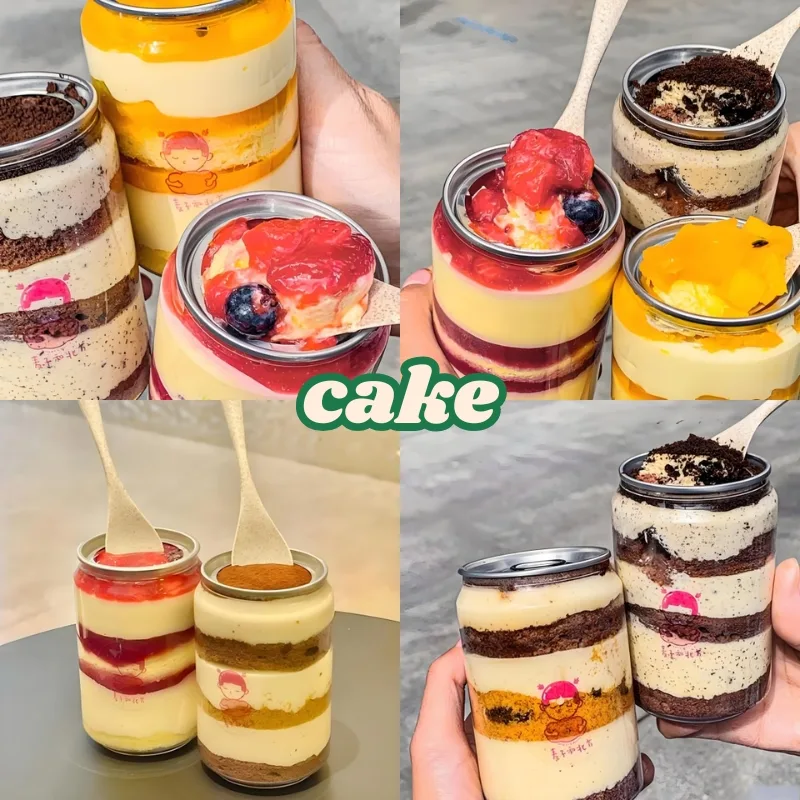
Nobody disputes that bubble tea went from an Asian street drink to a global phenomenon. But here’s what’s interesting: over the last two years, the real growth engine hasn’t been opening more stores. It’s been putting boba in a can.
Let’s Start With the Numbers
The global bubble tea market sits at $2.99 billion in 2026, growing at a steady 9.56% CAGR, and it’s projected to reach $4.72 billion by 2031.
But there’s a structural shift hiding inside those numbers: PET bottles and glass bottles now account for 51% of total category packaging revenue. In other words, canned and bottled ready-to-drink boba tea has overtaken freshly made, in-store servings as the industry’s biggest revenue driver.
Regionally, North America is the fastest-growing market at 10.22% CAGR — outpacing the global average. If you’re a bubble tea brand with eyes on the North American market, the window is wide open right now.
Why Fresh-Made Boba Needs a Can
The traditional store-counter model has a fundamental bottleneck: you can only drink it in or near the store.
A freshly made bubble tea has a peak window of about four to six hours. The tapioca pearls start retrograding — the starch recrystallizes, and that satisfying QQ chew turns into a hard, chalky center. The tea oxidizes and the flavor shifts. It’s a product that’s completely tethered to the point of sale.
That’s not a small problem. If your growth is limited to how many storefronts you can open, there’s a hard ceiling. And a lot of bubble tea brands are already hitting it — not because the brand is weak, but because the “physical store” channel itself has a saturation point.
What PET Cans Solve
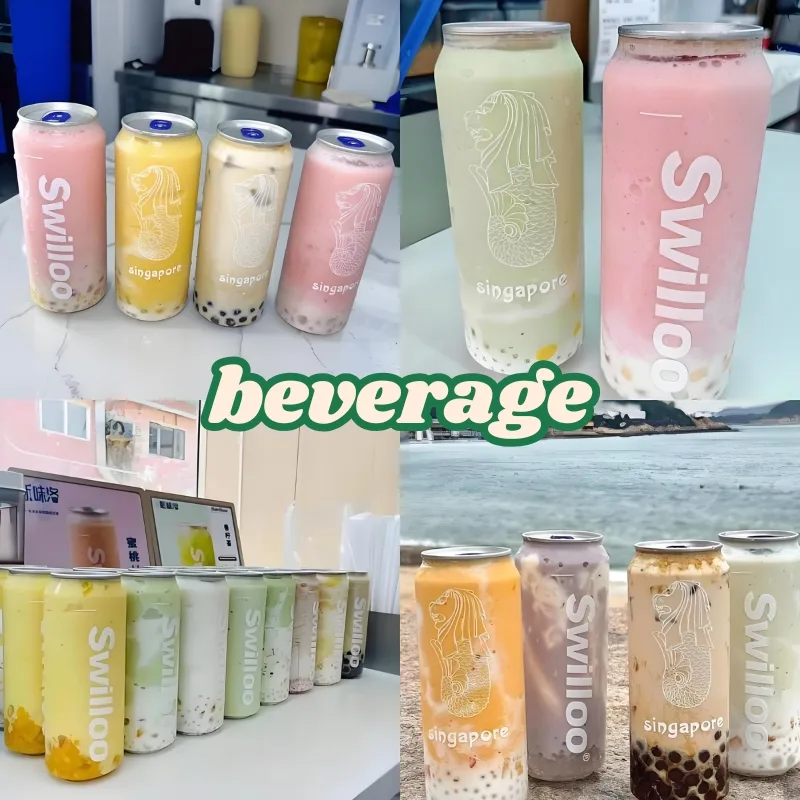
A transparent PET body paired with an aluminum easy-open lid. It sounds simple, but this combination tackles three bottlenecks that kept boba locked in stores.
1. Shelf Life Becomes Real
Sealed canning with proper filling technology pushes refrigerated shelf life to 7–14 days. That’s a fundamental product logic shift — you go from “drink it today or lose it” to “any day this week works.” And that means the product can actually sit on a retail shelf.
2. Distribution Unlocks
A sealed can of bubble tea goes anywhere a beverage goes: supermarket cold cases, convenience stores, vending machines, e-commerce platforms. No staff needed to mix it. No customer waiting at the counter. For the brand, growth stops being gated by store count.
3. The Product Markets Itself
This might be PET cans’ most underrated advantage: consumers can see the pearls.
Boba pearls settled at the bottom, tea color glowing through the transparent body — that’s the best product photography you never paid for. Aluminum cans can’t show you what’s inside. Paper cups can’t either. In a social media-driven market, photogenic packaging is its own distribution channel.
What to Watch For on the Operations Side
Pearl Size vs. Can Opening
Standard tapioca pearls run 10–12mm in diameter. Your can opening needs to let them pass through smoothly. Most PET cans with aluminum easy-open lids have openings that work, but don’t assume — test with your actual pearls.
Filling Is Different
Bubble tea filling isn’t the same as filling plain liquid. Pearls need to distribute evenly across every can. The fill level has to account for the volume the pearls displace. None of this is unsolvable — it just needs the right equipment. Partnering with an experienced packaging supplier matters more than anything else here.
Cold Chain Is Still Non-Negotiable
Canning extends shelf life, but it doesn’t eliminate the need for refrigeration. Sealed cans of milk tea still need cold-chain distribution. Make sure your distributors can handle chilled products before you commit to volume.
Pressure Handling
PET cans can withstand up to 90 PSI of internal pressure. For non-carbonated milk tea, that’s massive overkill — even for lightly carbonated sparkling tea variants, you’ve got plenty of headroom.
What Brands That Made the Switch Are Seeing
Industry feedback from brands that completed the store-to-can transition points to several consistent outcomes:
- Retail channel revenue up 30–50% — this is genuinely additive revenue, not cannibalization of in-store sales
- Waste rate plunges — canned product doesn’t have the “unsold by closing time” problem
- Higher average transaction value — consumers willingly pay a premium for the convenience of ready-to-drink boba
- Brand awareness lifts — shelf presence in retail is advertising you get paid for
The global PET packaging market hit $93.3 billion in 2026. China alone accounts for 32% of global plastic bottle production. At that scale, boba tea canning is just one thread in a much bigger ready-to-drink tea story — but it might be the fastest-growing one.
CHINPK manufactures PET cans purpose-built for bubble tea and layered beverages. A transparent body that shows off your product, and an aluminum easy-open lid that seals tight. Check out our can lineup, or talk to us about your bubble tea packaging project.