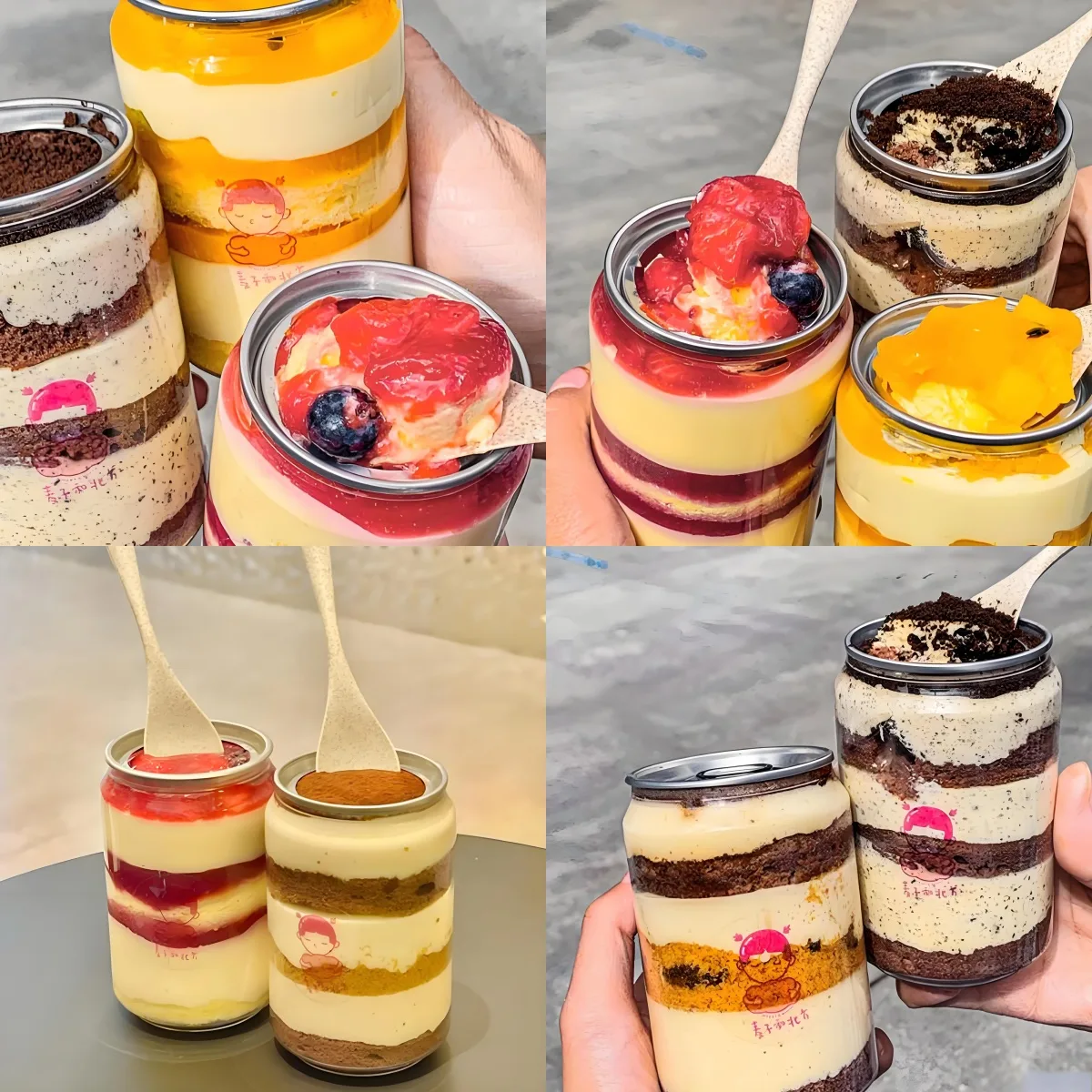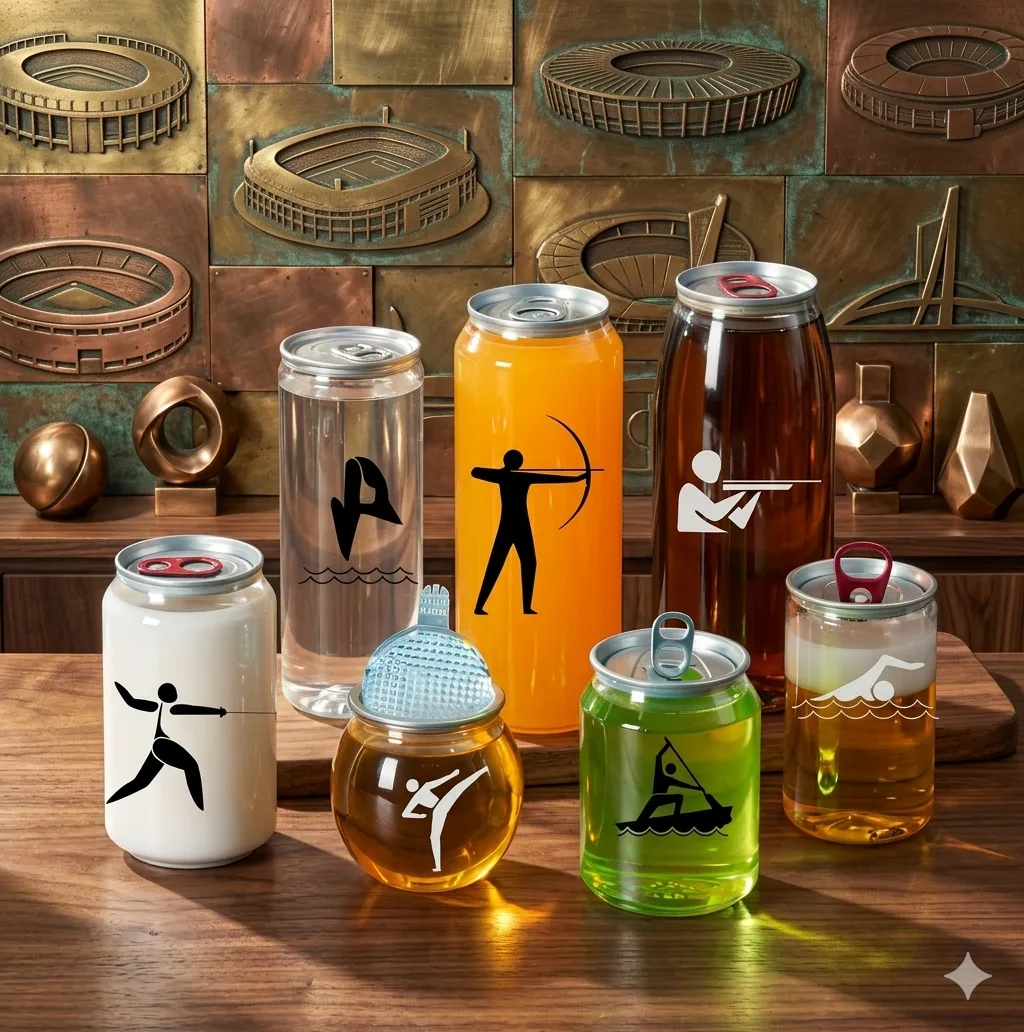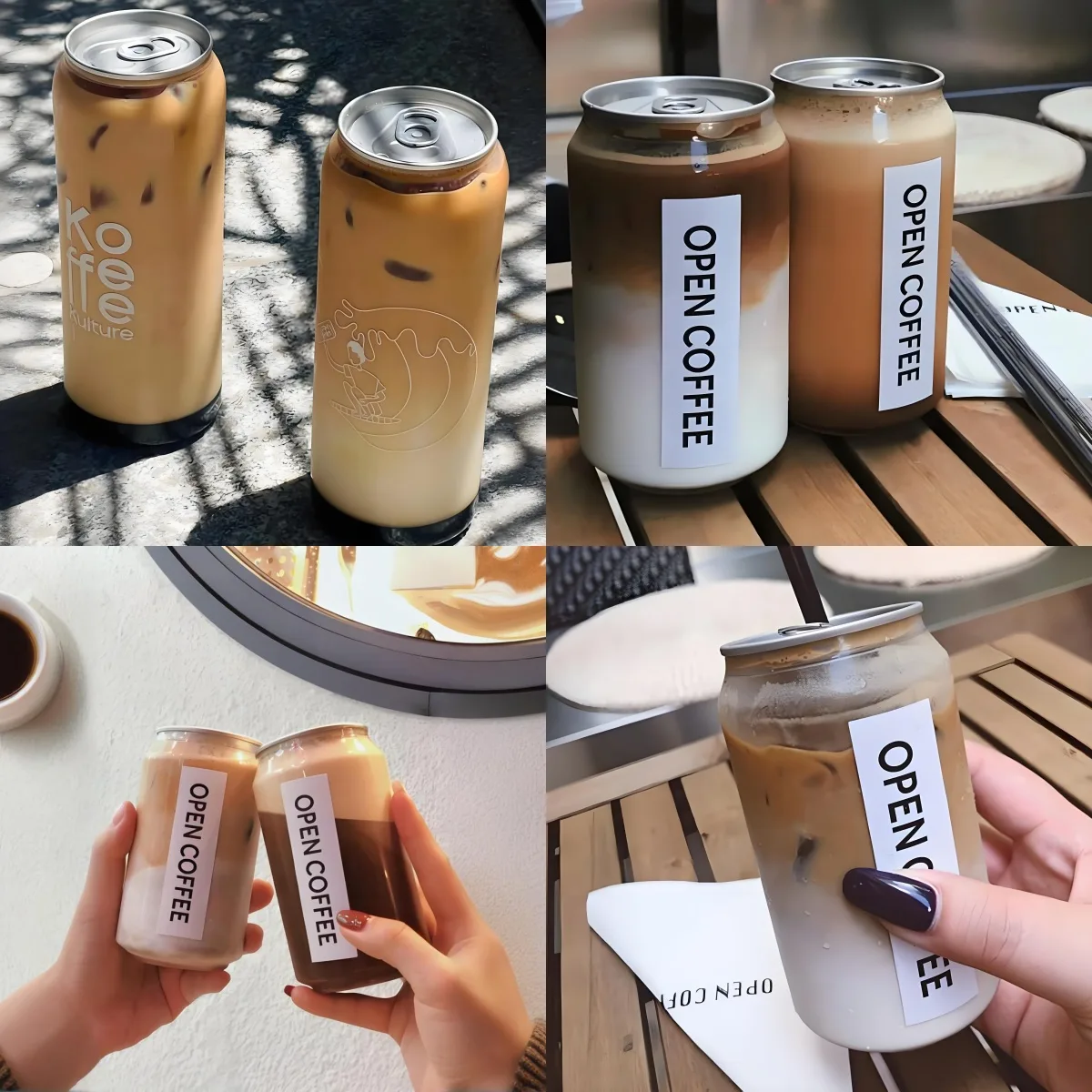
Think about the journey your product makes. It leaves your facility, sits in a warehouse for weeks, rides in a container across an ocean, bakes in a 40°C trailer somewhere, and eventually lands on a retail shelf. Months later, a consumer cracks it open — and it tastes exactly like it should.
The reason that works? It’s all in the seal. That thin aluminum lid you never think about is doing some seriously impressive mechanical engineering. Let’s break down what’s actually happening at the rim of your PET can.
Double Seam: It’s Not Glued. It’s Mechanically Locked.
A lot of people assume the lid on a PET can is glued on, or maybe heat-sealed like a plastic pouch. Neither is true.
PET cans with aluminum lids use something called a double seam. It’s a purely mechanical interlock — the lid and the can body get rolled together under pressure, and the resulting structure physically can’t come apart unless you destroy it. There’s no adhesive involved. It’s all physics.
The whole process happens in two stages, and both of them matter.
First Operation: Forming the Hooks
A curved seaming roller presses against the edge of the lid, curling it downward and tucking it under the can body’s flange. This simultaneously creates a “lid hook” (the curled lid edge) and a “body hook” (the curled can-body flange). At this point they’re loosely hooked together — the shape is there, but there’s no real seal yet.
Second Operation: Compressing Everything Tight
A second roller comes in. This one has a flatter profile, and its job is to crush those two hooks together with serious force. Here’s the critical part: the underside of the lid comes pre-coated with a thin layer of sealing compound. When that second roller applies full pressure, the compound gets squeezed into every microscopic gap between the metal lid and the PET body. The result is a completely hermetic, gas-tight structure.
Once those two operations are done, the lid is effectively part of the can. The only way to open it is to use the easy-open tab — which breaks the seal by design.
How Strong Is This Seal, Actually?
A properly executed double seam can handle up to 90 PSI of internal pressure. Put that in context: a carbonated soft drink typically generates 30 to 50 PSI of CO₂ pressure. At 90 PSI, your seal strength is nearly double what normal use demands. That’s a comfortable safety margin.
Now flip it around. If the seal quality is compromised — even by a tiny defect:
-
Carbonated drinks lose CO₂ slowly. The consumer opens the can and finds it flat. Here’s the brutal truth: nobody thinks “maybe the seal was bad.” They think “this brand sucks.” One flat can costs you way more than that one can.
-
Cold brew coffee, tea drinks — oxygen creeps in. Oxidation starts. Your coffee turns acidic, your tea goes bitter. The label says 12-month shelf life, but flavor quality starts deteriorating at month three because the seal wasn’t actually hermetic.
-
Ambient-stable products — with even a micro-leak, microorganisms have a path in. You can’t see it. The consumer can’t see it. They only find out after they drink it.
Three Reasons Double Seams Fail
We’ve been making PET cans for a long time, and seal failures almost always trace back to one of three things:
1. Incorrect Roller Pressure
Too much pressure crushes the seam — it collapses on itself and loses structural integrity. Too little pressure leaves gaps. Modern can-seaming machines use servo motors for precision control, but older equipment or poorly maintained lines will drift over time. A seamer that was perfectly calibrated in January might be off by June.
2. Defects in the Lid or the Can Body
The sealing compound on the lid needs to be uniform. If it’s too thick in one spot and too thin in another, you’ve got a built-in weak point in every single can. Same goes for the can body flange — if it was damaged during injection molding or during transport, a clean double seam becomes physically impossible.
3. Speed vs. Quality on High-Speed Lines
Seaming 300 cans a minute is impressive, but speed amplifies every small variance. Some facilities prioritize throughput over inline inspection, and the result is batch-level sealing defects that don’t get caught until it’s too late.
How to Evaluate Your Supplier’s Seal Quality
You don’t need to become a seaming engineer. Just ask your supplier for three things:
-
Seam tear-down reports. A technician periodically cuts open a sealed can and measures the seam under a microscope: seam thickness, seam height, body-hook-to-lid-hook overlap percentage. Numbers don’t lie — and they’re a lot more convincing than someone telling you “our seals are fine.”
-
Inline vision inspection. Modern lines use cameras to check every single can after seaming, looking at lid position and seam appearance. It’s not cheap equipment, but it catches the vast majority of visible defects before they leave the facility.
-
Leak testing. Pull samples from every production batch and run pressure-decay or vacuum-decay tests. This confirms whether the seal is genuinely hermetic, not just visually acceptable.
Why This Matters for Your Supply Chain
PET cans cut transport costs by 30-40% compared to glass — same volume, much less weight. That’s a real number that shows up on your freight invoice. But the savings disappear fast if a batch arrives with seal failures and you’re dealing with returns, refunds, and reputation damage.
CHINPK does all of the above on every batch before it ships. Our aluminum easy-open lids come with uniformly applied sealing compound. Our seaming parameters are calibrated per can size, per lid type, per product application — not one generic setting for everything. If your product is carbonated, or if it’s an ambient-stable product with a long shelf life, seal quality isn’t something to gamble on.
Browse our can and lid combinations, or ask us directly about our QC process. We’re happy to show you the tear-down reports — the data speaks for itself.