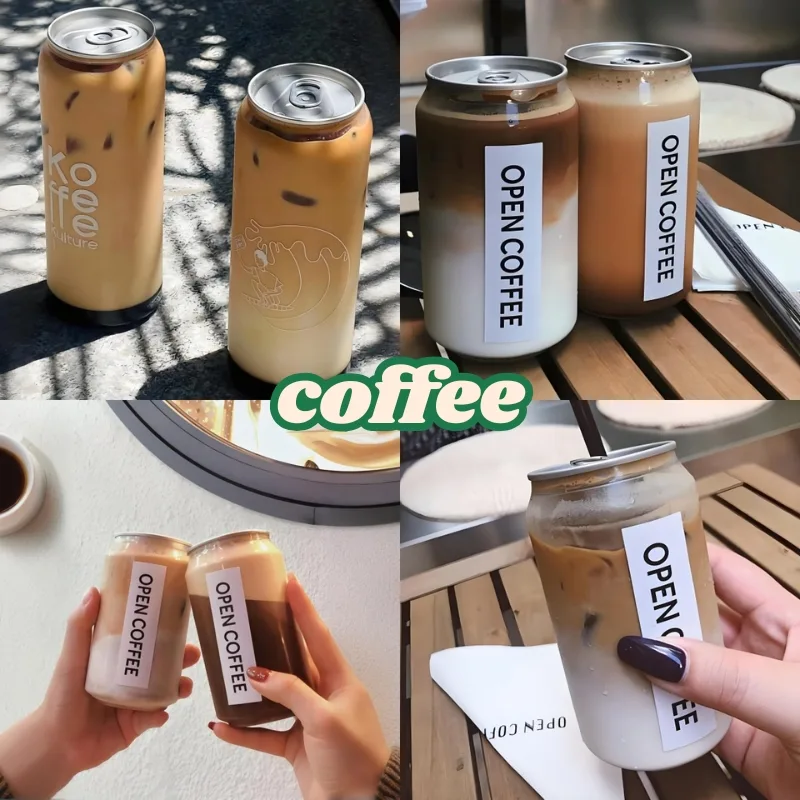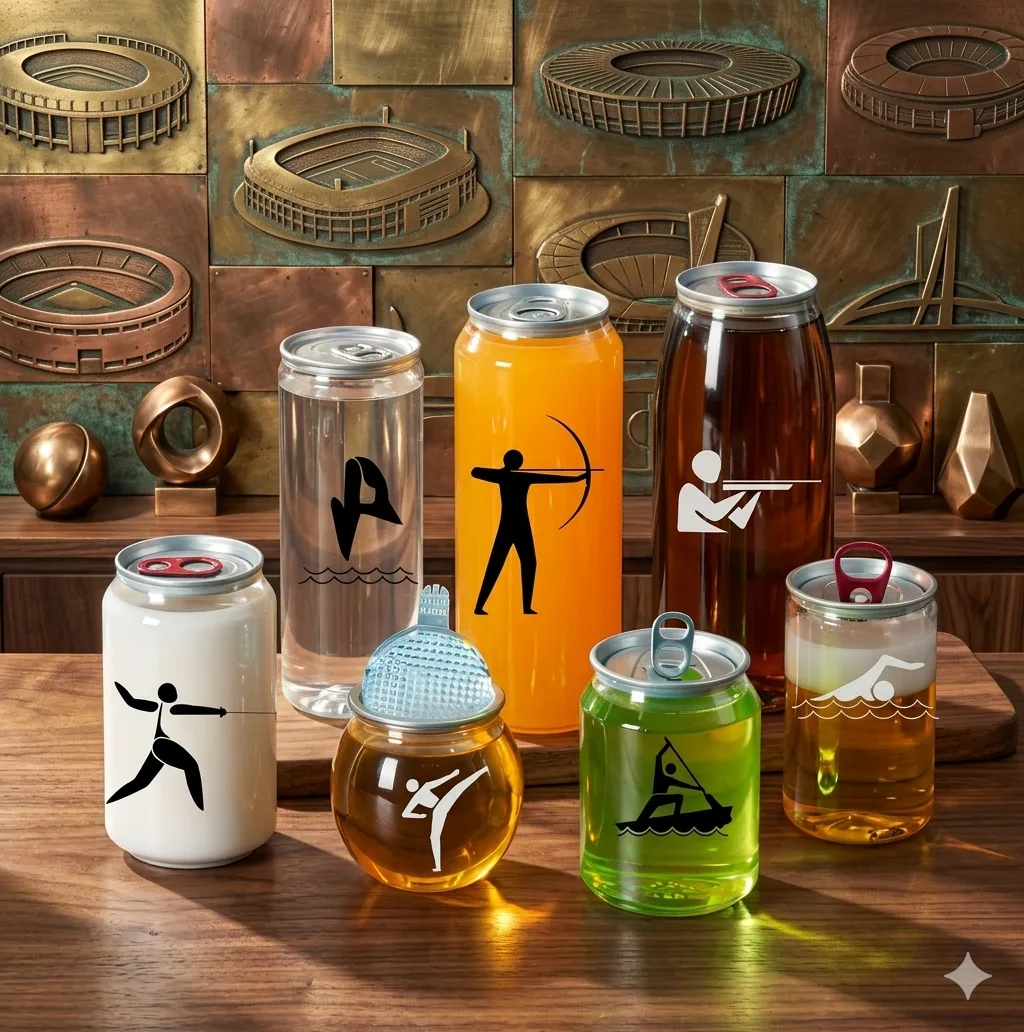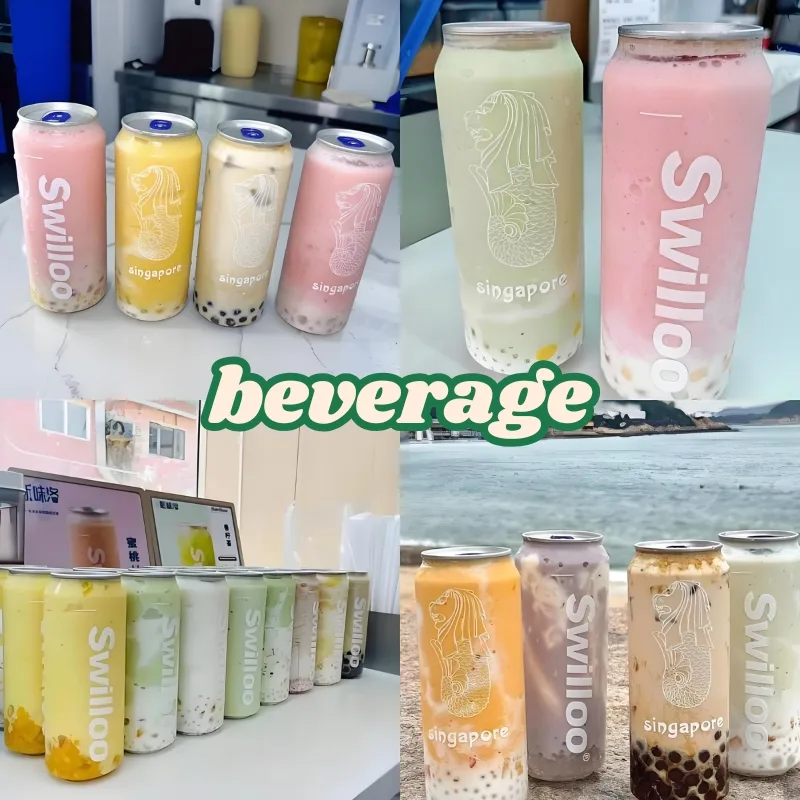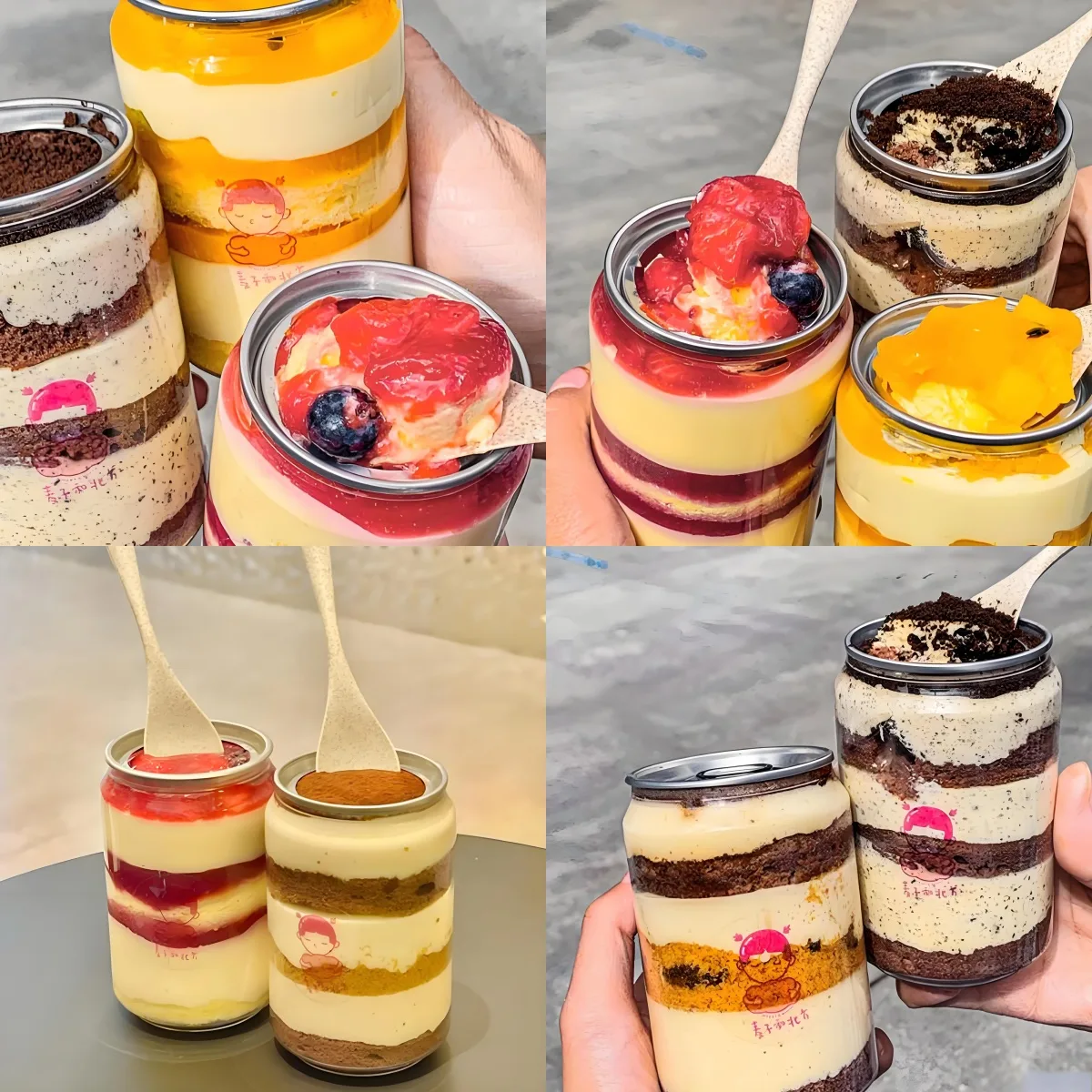
Packaging a layer cake is a balancing act: you need to show the product, protect a fragile structure, and keep it food-safe for days. Clamshells have been the default for decades. In 2026, clear PET cans are taking their place for the formats that live on social media and retail shelves.
Here’s how to get the spec right.
Step 1: Match the Can Diameter to the Cake
A layer cake in a can is built bottom-up: sponge, filling, frosting, repeat. The can diameter decides your portion.
| Can diameter | Best for | Typical portion |
|---|---|---|
| 65–75 mm | Single-serve mini cakes, mousse | 1 person |
| 85–99 mm | Standard personal cake | 1–2 people |
| 99–120 mm | Sharing / gift format | 3–4 people |
Don’t overfill. Leave 8–12 mm of headspace below the lid so the top layer isn’t compressed during capping and stacking.
Step 2: Pick the Lid
Two lid styles dominate the category:
- Aluminum easy-open (ring-pull) lids — the “cake in a can” look. Consumer pulls the tab, scoops straight from the can. Best for D2C and retail.
- Snap-on plastic lids — cheaper, resealable, good for in-store bakery and repeated access.
For a product that travels, the aluminum easy-open lid also gives you a tamper-evident seal out of the box.
Step 3: Lock in Shelf Life
A PET can extends life, but only if the recipe cooperates. Two rules:
- Tune moisture. High-water fillings (fresh fruit, custard) shorten refrigerated life. Aim for recipes validated at 7–14 days in the can.
- Keep it cold. Canning pushes shelf life from hours to days — it does not remove the need for refrigeration. Cold chain is still non-negotiable for cream-based cakes.
PET’s barrier is good enough for short-shelf-life fresh cakes. For long-life retail kits, you’d move to retort or dry formats instead — a different product entirely.
Step 4: The Five Specs That Decide Success
When you source PET cake cans, check these:
- Clarity — crystal-clear PET shows layers; haze kills the impulse buy.
- Wall rigidity — thin but stiff walls survive stack pressure in transit.
- Lid seal integrity — no leaks, no oxygen ingress on the cream layer.
- Food-grade, BPA-free resin — non-negotiable for EU and North American retail (see our compliance guide).
- Printability — a clean surface for custom labeling or direct printing.
Step 5: Prototype Before You Scale
Because cake-in-a-can is still a trend format, the smart move is a small pilot. Run a limited seasonal batch, photograph it, post it, and read the response before committing to volume. With low MOQs, that’s now a realistic path for a micro-bakery — not just a national brand.
Clear PET cans turn a fragile dessert into a shippable, photogenic, single-serve product. CHINPK supplies food-grade, BPA-free PET cake cans in the diameters above, with aluminum easy-open or snap-on lids. See the can range, or ask us about custom sizing and printing.